
WASHINGTON COUNTY – The Bear Claw Poppies are in bloom right now. They are beautiful up close and can be seen as little puffs of white scattered across the gypsum hillsides.
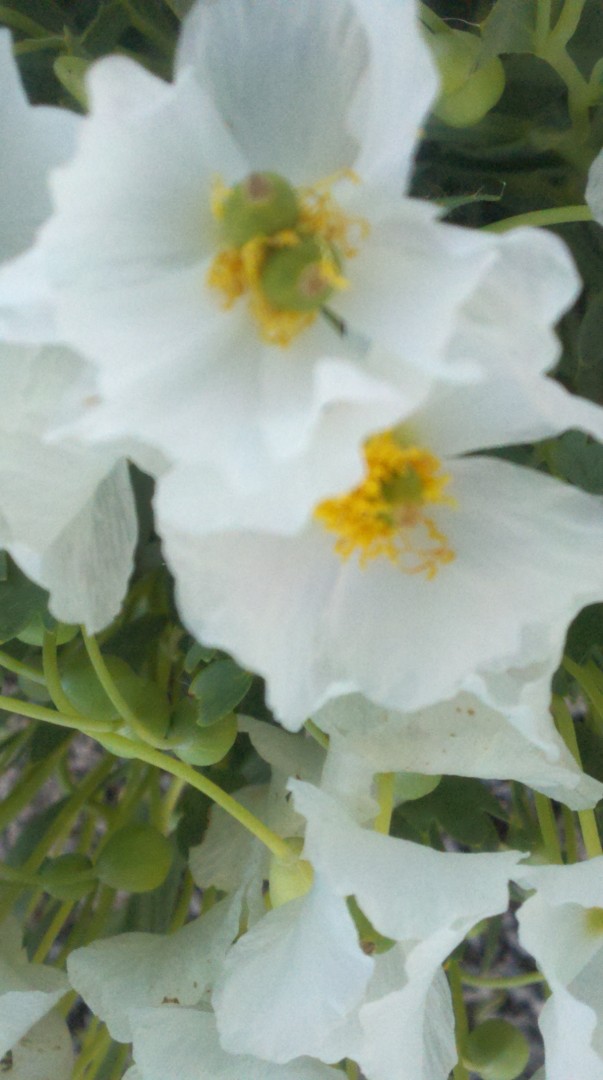
This poppy is unique to Washington County, commonly referred to as the Dwarf Bear Claw Poppy (by the Bureau of Land Management) and as the Dwarf Bear Paw Poppy (by the U. S. Fish and Wildlife Service, the federal agency that manages threatened and endangered species).
The Bear Claw Poppy requires a specific type of soil to thrive, a gypsiferous soil, one that contains gypsum. Elaine York of The Nature Conservancy said this kind of soil is only found in Washington County, especially in those areas with a geological formation called the Moenkopii, a type of formation with the right soil exposed.
“Botanists have been studying the Bear Claw Poppy for 25 years, and to date over 50 percent of its habitat has been lost to development,” York said. “You have to protect the habitat where the poppy grows, it is a picky plant, you can’t transplant it, you can’t grow it in a greenhouse, you can’t collect seeds and reproduce it … botanists have collected seeds for years and have had no success.”
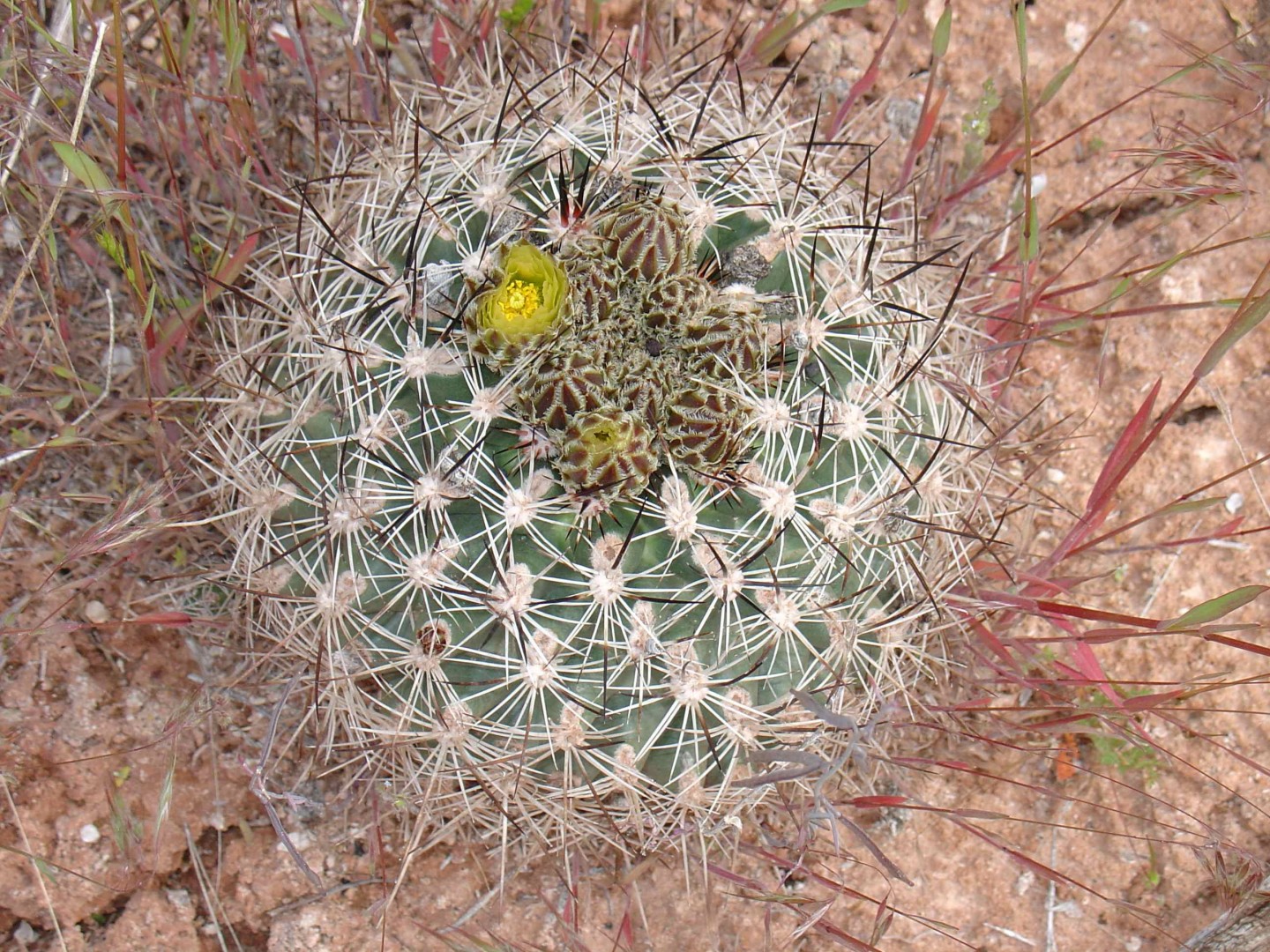
The State of Utah School and Institutional Trust Lands Administration, or SITLA, owned large acreage containing the gypsiferous soil, the Moenkopi Formations and thus the Bear Claw Poppy habitats. Among those is an area of gypsum formations called White Dome. The White Dome Nature Preserve, as it is now called, is home to the largest gypsum formation; it is located off River Road north of the Southern Parkway. In addition to the Bear Claw Poppy, it is habitat for the Siler Pincushion Cactus, which is also threatened, York said, as well as providing protective habitat for several at-risk animal species, including the zebra-tailed lizard and the loggerhead shrike.
SITLA approached The Conservancy and the two, along with various federal and state government agencies, including FWS, Utah Department of Transportation and the Bureau of Land Management, entered into a letter of intent in 2005.
“They asked if we (The Conservancy) would purchase some of the property there, and the first of four different phases was in 2007,” York said. “The last of the four was purchased this year in March.”
Ultimately, UDOT owns 140 acres at the south end of the White Dome area and The Conservancy owns a little less than 648 total acres of that area, 297 of which were acquired in the final phase this year.
While interests sometimes compete between those favoring off-road recreation and those favoring preservation of threatened species, The White Dome Nature Preserve is only a portion of 10,000 acres of land held by SITLA known as the South Block and subject to master planning. Part of the planning over the years has included open meetings inviting public comment. As plans were in play for the new airport, huge residential developments as well as industrial plans, it was understood that some of that recreational playground would be lost. BLM and the Forest Service, the primary public lands services in Southern Utah, designate areas specifically for off-road (OHV) use – points of contact include BLM St. George Field Office, Washington County’s portion of the Forest Service including Dixie National Forest and Pine Valley Ranger District.
Nonetheless, as part of this final phase acquisition, as well as fencing the White Dome Nature Preserve, York said, SITLA retained an easement for creation of a trail system within the White Dome area. The plan for the trail system construction is mapped out although it is not completed and thus not yet open to the public.
“We will have a portion that is open with a few hiking trails,” she said, “there will be educational points, SITLA will construct those trails and interpretive signs.”
This phased acquisition is distinct from the Bear Claw Poppy trail system that runs below and on the backside of the Tonaquint ridge from the Bloomington suburb of St. George (trailhead at the end of Navajo) all the way to and beyond the ridge opposite the Green Valley area. In this area, BLM and SITLA have designated and fenced some portions for protection of the poppy. The protected areas are those nearest the bluffs and are inaccessible to OHVs, horses and cattle – but the protected area is still replete with trails for hiking and cycling. The other side of the fence remains available in large portion to OHV use, equestrian, shooting and much recreational use.
Other areas in Washington County where the Bear Claw Poppy can be found include the Red Bluffs area, Warner Ridge and on the hills above Brigham Road just past the truck stop (public land managed by the BLM).
The Conservancy has been active in the balanced preservation of important natural areas in Washington County — and has been a private landowner and taxpayer in the County – for over 20 years. Its acquisition of the recent portion of the White Dome Nature Preserve was thanks to a $713,000 grant from FWS as well as contributions from private supporters.
Email: [email protected]
Twitter: @STGnews
Copyright St. George News, SaintGeorgeUtah.com LLC, 2011, all rights reserved.